The general principles
Stay calm and be reassuring.
Children will react to both what they hear and how it is said. They Can pick up cues from what they hear around them. They can catch easily the emotion on your face while talking.
Be available.
Make time to talk to them. Be sure they know they can come to you to ask their questions.
Avoid blaming or stigmatizing others for covid-19
Virus infections can affect anyone, regardless of race or ethnicity. Avoid assumptions about who might have the infection.
Be attentive to what kids watch on TV,or online.
Reduce the amount of media time focusing on COVID-19. Too much information on a single topic leads to anxiety.
Give honest and accurate information.
Children should receive truthful information appropriate for their age.
Tell them how some stories on the Internet may be based on rumors.
Teach them everyday actions to protect against germs.
Teach them to stay away from anyone who is coughing , sneezing or sick.
Teach them to cough or sneeze into a tissue or their elbow, then dispose of the tissue into the trash.
Discuss any actions that may be taken at school for protection.
(e.g., repeated hand-washing, cancellation of activities , shifting to remote learning)
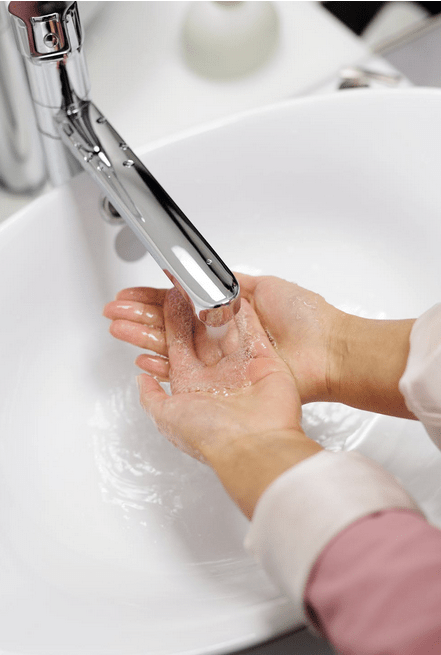
Get them into the habit of hand-washing.
Teach them the proper way to wash their hands with water and soap for at least 20 seconds, especially after blowing the nose, sneezing, or coughing; going to the bathroom; and before eating or preparing food.
Teach them how to use hand sanitizer. Supervise young children when they use hand sanitizer to prevent swallowing alcohol.
Facts for children
COVID-19?
It is a new virus. Doctors and scientists are studying it right now.
Recently, this virus has made many people sick. Most people will be ok, especially children, but some people might get severe illness.
How to protect yourself?
Following are some healthy habits for protection:
Cough or sneeze into a tissue or your elbow. If done into a tissue, throw it immediately in the trash.
Keep your hands away from your eyes, mouth, and nose. This will keep germs away.
Wash your hands with water and soap for at 20 seconds or more. Follow these five steps—wet, lather until you make bubbles, scrub rubbing hands together, then rinse and dry. You may sing the “Happy Birthday” song twice.
If you don’t have water and soap, have an adult help you use a hand sanitizer.
Keep things around you clean. Help clean the things we touch the most, like desks, doorknobs, light switches, and remote controls.
If you feel unwell, stay home.
What happens if you become sick ?
COVID-19 can look different from person to person. For many people, it would be a little bit like having the flu. People can have a fever, cough, or have a hard time taking deep breaths. Most infected people have not gotten very sick.
Only a few people have had more serious problems. From what is observed so far, most children don’t seem to get very sick. While a lot of adults get sick, most adults get better.
If you get sick, it doesn’t mean you have COVID-19. What’s important to remember is that if you do get sick, the adults at home will help get you any help you need.
Reference : Nitonal Institute of Health
 Wellbeing Arena